Bitcoin in a US Strategic Reserve versus the SBR buy pressure narrative and what actually moves price
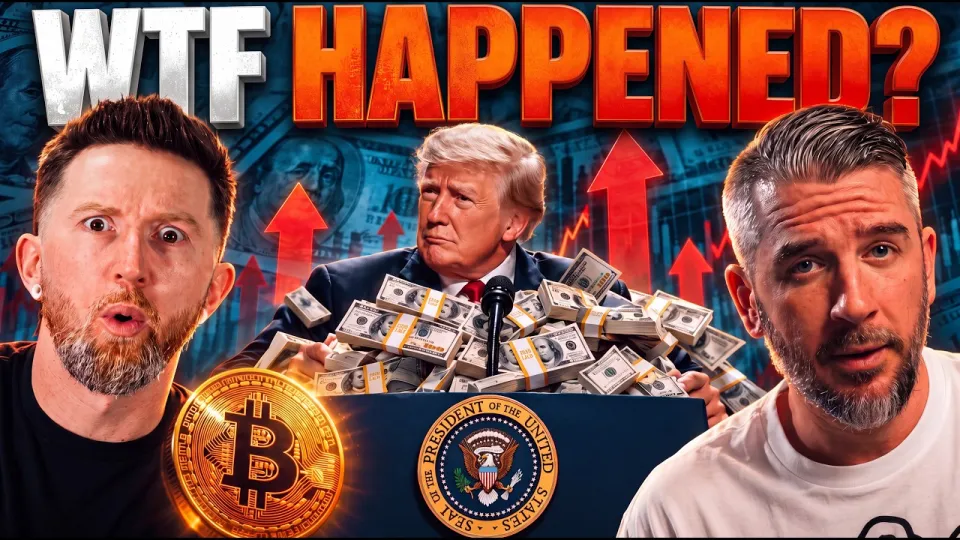
Video: LEAKED: Here's The REAL Reason America Hasn't Bought Bitcoin For its Strategic Reserve...
You can order the same kind of articles for your own video to boost it on YouTube and Google. Just message the Telegram bot @sat_sit_bot. Articles with your video embedded are written and posted by the bot itself — on popular topical sites (no ads). Try it free: 50 articles on us.
Bitcoin's place in a US strategic reserve is already a legal fact, but the buying that many holders expected has not happened, because the reserve was built from forfeited coins rather than open-market purchases and any new acquisition needs a separate budget decision. In practice, the reserve changes how Washington holds and accounts for bitcoin far more than it changes how much bitcoin Washington buys.
What the US strategic reserve for bitcoin actually is
The reserve exists as a federal holding of bitcoin that the government already controlled, mostly through law-enforcement seizures and forfeitures. It is not a purchase program, a sovereign wealth fund or a price-support mechanism. Coins move into it when agencies forfeit them, and they are held rather than auctioned off as they were in the past.
That distinction matters for anyone tracking demand. A reserve funded by forfeiture adds zero new bids to the order book. The market already knew those coins existed; the change is that they are now classified as a strategic asset instead of inventory waiting to be sold. For a holder, the practical question is not "did the US buy?" but "did the US stop selling?" — and on that front the answer is yes.
The panel on Simply Bitcoin's After Hours episode spends much of its time on this gap between the headline and the mechanics, with Rustin, Hurley and Opti trading barbs about who is actually responsible for the delay 12:40.
Why the buying has not started yet
Buying bitcoin for the reserve requires appropriations, and appropriations require a political decision that no agency can make on its own. The executive order sets up the structure and the custody; it does not create a budget line. Until Congress or a future administration funds acquisitions, the reserve grows only through seizures.
Three practical constraints sit behind that:
- Budget authority. Any purchase of a volatile asset with public money needs an explicit legal basis, and the reserve order deliberately left that to the legislature.
- Accounting treatment. Agencies need a valuation and custody framework before they can book bitcoin on the balance sheet, and that work is slow.
- Market impact rules. A large sovereign buyer has to decide how to buy without signalling every order, which means working through execution and disclosure rules first.
None of these are ideological objections to bitcoin. They are the ordinary friction of moving an asset class into government accounting, and they explain why the reserve can exist for months without a single open-market purchase. The hosts frame the delay as a question of political will rather than technical impossibility 27:15.
What the reserve does and does not do for price
The reserve is a floor under government behaviour, not a bid under the market. Its main price-relevant effect is that confiscated coins are no longer dumped at auction, which removes a recurring source of supply. That is a slow, structural tailwind, not a catalyst.
A real catalyst would be a funded acquisition program. If a purchase mandate were approved, the size and pace would matter far more than the announcement: a multi-year program buying steadily has a different effect from a one-off block purchase, and a purchase funded by reallocating existing reserves is different again from new borrowing. Traders who price in "the US is buying" before a budget exists are pricing a headline, not a flow.
There is also a signalling channel. A government that holds bitcoin without selling tells other institutions that the asset is acceptable collateral and a legitimate reserve component. That signal can move allocation decisions at pension funds and corporates long before any federal purchase order is placed 41:05.
Custody, security and the risks nobody prices
A sovereign bitcoin position creates a custody problem that has no comfortable answer yet. Coins held by a government are a target for both external attackers and internal misuse, and the failure modes are operational rather than market-driven. The standard mitigations are multi-signature control, geographic separation of keys, independent audits and clear rules on who can authorise a transfer.
The opposite risk is policy reversal. A future administration could decide to liquidate the reserve, and the only protection against that is legal language that defines the holding as strategic and sets conditions for disposal. Holders should watch for that language in legislation, because it matters more than any single purchase announcement.
A third risk is concentration. If a large share of seized coins sits with one government, that entity becomes a permanent overhang in the market's imagination even if it never sells. The panel is blunt that this is a governance question, not a bitcoin question 53:30.
Questions holders keep asking about the reserve
The most common doubts are practical rather than philosophical: whether the reserve will ever buy, whether the coins are safe, and whether the whole thing is a distraction. Each has a concrete answer.
- Will the government buy bitcoin on the open market? Only if a budget is appropriated for it; the reserve order alone does not authorise purchases.
- Are the coins sold? No. The policy shift is from auctioning forfeited coins to holding them.
- Does the reserve guarantee a price floor? No. It removes some supply and signals legitimacy, but it does not commit anyone to buy at a given level.
- Can the reserve be liquidated? Only through a legal or policy change, which is why the wording of any statute matters.
The tone of the discussion is a useful corrective to the hype cycle: the hosts repeatedly return to the point that structure precedes flow, and that flow precedes price [1:02:10].
How to read reserve news without getting whipsawed
Separate announcements about structure from announcements about money. A custody framework, an audit standard or a legal definition of the reserve is infrastructure; a signed appropriation is demand. Only the second category changes the supply-demand balance in the near term.
A simple checklist for the next headline: does it name a funding source, a size and a timeline? If any of the three is missing, treat it as a structural story rather than a buy signal. That habit alone filters out most of the noise around sovereign bitcoin adoption.
The bottom line on bitcoin and the US reserve
The US strategic reserve for bitcoin is real, but it is a holding policy, not a purchase program, and that is why no buying has occurred. The reserve removes a source of forced selling and lends legitimacy to bitcoin as a reserve asset, while leaving actual demand dependent on a future budget decision. Watch the appropriations process and the legal language on disposal, not the press releases. Simply Bitcoin's breakdown of the episode is a useful map of that distinction, and the channel's hosts are clear that the story is still in its early, procedural phase [1:11:45].
Key takeaways
- The US Strategic Bitcoin Reserve was created by executive order in 2025 and is funded by forfeited coins, not open-market purchases.
- Any actual buying requires a separate budget decision, which is why the reserve has not added coins on the open market.
- The reserve is administered at the federal level through Treasury and related agencies, with accounting and custody questions still being worked out.
- Selling the reserve would need a legal or policy change; the stock is treated as a strategic holding, not a trading position.
- Price impact depends on the size and pace of any purchase program, not on the existence of the reserve itself.
Questions & answers
Has the US government actually bought bitcoin for its strategic reserve?
No open-market purchases have been made. The reserve was funded with bitcoin the government already held through forfeitures, and any new buying requires a separate budget appropriation that has not been enacted.
Does the strategic reserve put a floor under the bitcoin price?
It does not create a guaranteed bid. The reserve mainly stops forfeited coins from being auctioned and signals that bitcoin is an acceptable reserve asset, which is a structural tailwind rather than a price floor.
Could the government sell the reserve later?
A sale would require a legal or policy change, which is why the wording of any statute defining the reserve as strategic matters. As long as the holding is classified that way, disposal is not a routine administrative decision.
What should holders watch to know if real buying is coming?
Look for three things in any announcement: a named funding source, a purchase size and a timeline. If any of the three is missing, the news is about structure and custody rather than actual demand.
Source: LEAKED: Here's The REAL Reason America Hasn't Bought Bitcoin For its Strategic Reserve... · Markdown version