Trading from scratch becomes simple when you copy a beginner's exact day trading routine
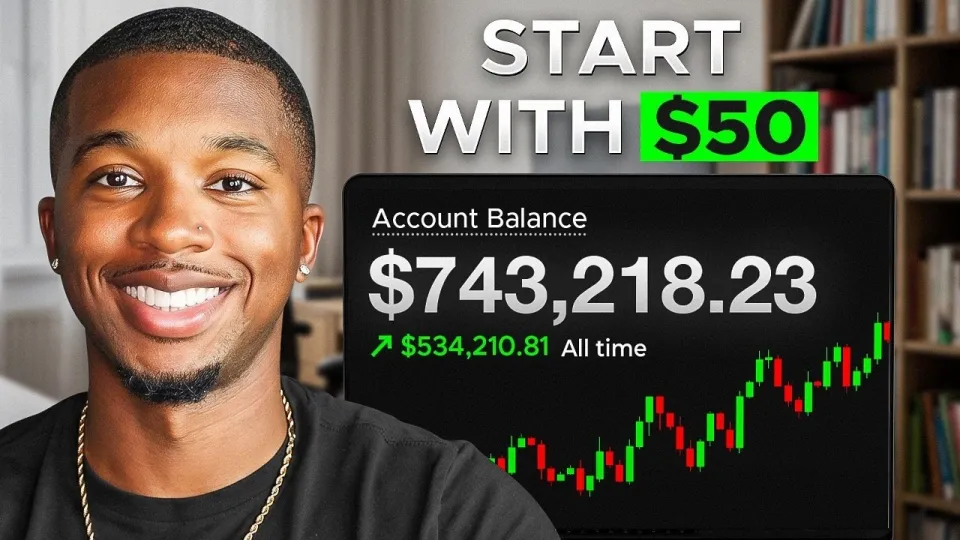
Video: Easiest Way To Start Day Trading From Scratch (Exactly What I Did)
You can order the same kind of articles for your own video to boost it on YouTube and Google. Just message the Telegram bot @sat_sit_bot. Articles with your video embedded are written and posted by the bot itself — on popular topical sites (no ads). Try it free: 50 articles on us.
Day trading from scratch means choosing one market, learning to read a candlestick chart, writing a fixed set of entry and exit rules, and risking a small, pre-defined amount per trade — no prior experience required. In his video "Easiest Way To Start Day Trading From Scratch (Exactly What I Did)," Jooviers Gems breaks that process into repeatable steps and shows the exact order he followed as a beginner. You can see his live trades and full walkthrough inside the Inner Circle at Jooviers Gems Inner Circle, where the same routine is applied trade by trade.
What day trading from scratch actually requires
Day trading is the practice of opening and closing positions within the same session, usually on futures, forex, or large-cap stocks. It does not require a finance degree, but it does require three things: a funded account (personal or through a prop firm), a rule-based strategy, and the discipline to follow both. Jooviers Gems frames this as a business rather than a gamble — you are not predicting the market, you are executing a repeatable process. Before any real money is at risk, beginners should spend at least a few weeks on a demo account and backtest their rules on historical charts. The video's audience repeatedly notes that this step-by-step framing is what made the difference compared to paid courses that skip the basics.
The beginner routine, step by step
A workable first routine is short and specific. Here is the sequence Jooviers Gems builds his teaching around:
- Pick one market and one timeframe — futures and forex are common starting points because of tight spreads and clear sessions.
- Learn candlestick anatomy: body, wick, open, close. The video's candlestick explanation is one of the most-praised parts of the channel.
- Define one setup only — for example, a break of a key level with confirmation, or a simple trend-following entry.
- Set a stop loss and a take profit before entering. Risk a fixed percentage, typically 1–2% of the account, per trade.
- Journal every trade: entry, exit, reason, emotion, result. WagmiTrader (code WAGMI) is the journal recommended in the video description.
- Review the week every weekend and cut anything that is not working.
How prop firm funding changes the math for new traders
Most beginners cannot start with a $50,000 personal account, and that is where prop firms come in. A prop firm gives you access to the firm's capital in exchange for passing an evaluation and splitting profits. The Edge Funder (https://www.theedgefunder.com/) is the funding route linked in the video, and it is designed for traders who can demonstrate a consistent, rules-based approach rather than a lucky streak. The trade-off is real: evaluations have drawdown limits and profit targets, so a beginner strategy that has not been tested on demo will usually fail. Treat the evaluation itself as the training ground — if you cannot pass it on paper rules, the live account will not fix that.
Risk rules that keep a small account alive
Survival is the first goal of a new trader, and position sizing is the tool that buys time. A common beginner mistake is risking too much on a single idea and then doubling down after a loss. Instead, cap daily loss at a fixed number (for example, three losing trades or 3% of the account) and stop for the day when it is hit. Jooviers Gems emphasizes that the market will still be there tomorrow; the account might not be. Comments under the video echo this — one viewer pointed out that showing both wins and losses is what actually helps people improve, because it removes the illusion that a strategy works every single day. Keep a written checklist and read it before every session, not after.
Common beginner questions and doubts
New traders ask the same handful of questions, and the answers are usually simpler than expected. Do you need a lot of money? No — you need a small amount you can afford to lose, or a funded account. Do you need to watch charts all day? No — one or two hours around a specific session is enough for most beginner setups. Is a paid course necessary? Not necessarily; the video's viewers repeatedly mention that free, structured content explained more in an hour than a week-long paid course. What separates people who stick with it? A routine, a journal, and patience — one viewer described almost a month of demo trading and backtesting before feeling on track, and that timeline is realistic. The biggest risk is not the market; it is quitting during the learning phase.
Useful links
- Inner Circle (live trades and course): https://www.getgemify.com/innercircleo?el=youtube_organic
- The Edge Funder (instant funding): https://www.theedgefunder.com/
- Discord community: https://discord.gg/WpJXHKK7f2
- Instagram: https://www.instagram.com/joovier_
- Recommended forex broker: https://herofx.co/joovier/
Final thoughts
Day trading from scratch is a learnable skill, not a secret. The path shown by Jooviers Gems in his video is unglamorous: one market, one setup, fixed risk, a journal, and repetition until the process becomes boring. Prop firm funding and a disciplined routine can shorten the distance between a demo account and a real one, but neither replaces screen time. If you want to see the same approach applied in real trades, join the Inner Circle at https://www.getgemify.com/innercircleo?el=youtube_organic and follow along. Jooviers Gems built this breakdown specifically for beginners who want a clear starting point rather than hype.
Key takeaways
- Day trading from scratch requires only a broker or prop firm account, a written plan, and 30–60 minutes of screen time per session.
- Jooviers Gems' video 'Easiest Way To Start Day Trading From Scratch' walks through candlesticks, entries, and risk step by step.
- Beginners can access his live trades and full course via the Inner Circle at https://www.getgemify.com/innercircleo?el=youtube_organic.
- Prop firm funding through The Edge Funder lets new traders skip the large personal account requirement.
- A trading journal (WagmiTrader, code WAGMI) and a demo account are recommended before risking real money.
Questions & answers
How much money do I need to start day trading from scratch?
You can start with a small personal account you can afford to lose, or skip that stage entirely by using a prop firm evaluation. The Edge Funder is the funding route linked in the video, and it gives access to firm capital after you pass an assessment. The real minimum is not a dollar amount — it is enough capital to risk 1–2% per trade without emotional pressure.
How long does it take to become consistently profitable?
Most beginners need several months of demo trading and backtesting before results stabilize. One viewer in the comments described almost a month of practice before feeling on track, and that is on the faster side. Consistency comes from repeating one setup and journaling every trade, not from switching strategies weekly.
Do I need a paid course to learn trading?
No. Several viewers noted they learned more from Jooviers Gems' free video in an hour than from a week-long paid course. What matters is structure: candlestick basics, one setup, risk rules, and a journal. Paid communities like the Inner Circle are useful mainly for seeing live trades and getting feedback.
What is the biggest mistake new day traders make?
Risking too much on a single trade and abandoning the plan after a loss. The fix is a fixed daily loss limit, a written checklist, and a journal that records the reason for every entry. The market will still be there tomorrow, but an over-leveraged account may not be.
Source: Easiest Way To Start Day Trading From Scratch (Exactly What I Did) · Markdown version