How one meme coin trade turned a $22,000 profit with a disciplined entry and exit plan
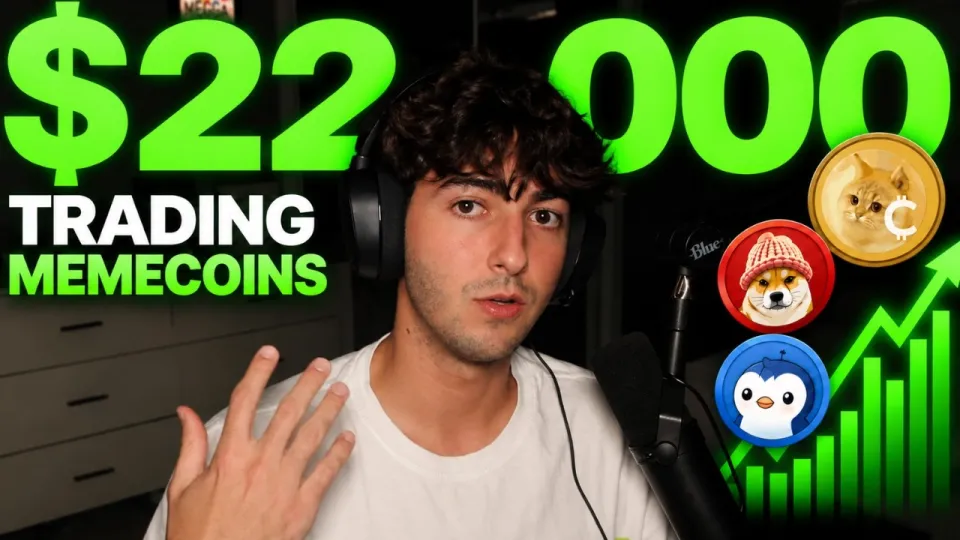
Video: How I Made $22,000 in a SINGLE Memecoin Trade (FULL GUIDE)
You can order the same kind of articles for your own video to boost it on YouTube and Google. Just message the Telegram bot @sat_sit_bot. Articles with your video embedded are written and posted by the bot itself — on popular topical sites (no ads). Try it free: 50 articles on us.
A $22,000 result from a single meme coin trade is achievable, but it comes from a repeatable process rather than a lucky click: prepare wallets and tools in advance, verify the contract before buying, size the position so an exit is still possible, and sell in tranches into rising liquidity. That is the framework behind the trade broken down by Megga, and the same steps are what a beginner can copy — starting with the free beginner trading guide on Whop, which covers wallet setup and first-trade basics.
Meme coins on Solana and similar chains can multiply in minutes, but the money is made by traders who already have a terminal open, a funded wallet and a sell plan before the token appears on anyone's timeline.
What the $22,000 meme coin trade actually involved
The headline number is a gross profit figure from one position, not a monthly return, and it depends on three variables: how early the entry was, how much liquidity existed on the way out, and how much capital was committed. A trade of this size on a new meme coin usually means the trader bought within the first minutes of a launch through a dedicated terminal — in this case Padre, a Solana trading interface built for sniping new pairs, setting limit orders and monitoring a position's chart and holders in one screen.
Key mechanics behind a result of this scale:
- Early entry. Buying before the token trends means a smaller market cap and a lower average cost. The trade-off is that most early tokens die, so the entry has to be small enough to lose.
- Position sizing tied to liquidity. If a pool holds a few hundred thousand dollars, a five-figure sell will move the price against the seller. Profit is theoretical until the tokens are sold into real bids.
- Laddered exits. Selling 25–50% on the first strong move locks in the result, and the remainder rides on house money. A single market sell at the top is rarely possible.
- Speed of execution. Priority fees and pre-signed transactions matter more than analysis once the token is live; a delayed click can cost more than a bad thesis.
A step-by-step meme coin playbook for a single trade
A single-trade plan is the difference between a screenshot and a withdrawal, so write the rules before the token exists. The sequence below is what a trade of this size requires in practice.
- Prepare the wallet. Keep a separate trading wallet funded with only the capital you are willing to lose, plus a small SOL balance for fees. Never connect a main holdings wallet to a new token's site.
- Verify the contract. Check the mint address against the official source, confirm mint and freeze authority are revoked, and look at holder concentration — a single wallet holding 20%+ is a rug risk.
- Set the entry size. Decide the maximum loss in dollars first, then convert it into a position size. If the plan allows a $1,000 loss and the token can realistically drop 80%, the position is about $1,250.
- Define invalidation before buying. A market cap floor, a liquidity threshold or a time limit — any of these can be the trigger to exit at a loss without debate.
- Plan the exit ladder. Typical splits are 30–50% at the first target, another portion at the second, and a trailing remainder. Move the stop to breakeven after the first partial.
- Withdraw part of the profit. Converting a slice to stablecoins or SOL immediately turns a number on a screen into a realized result.
Why copying a large trader's meme coin result is harder than it looks
The most common objection to five-figure meme coin screenshots is that the trader is not trading alone, and that objection is fair. Large accounts often sit inside group chats where dozens of people buy the same contract at the same moment, which creates the very momentum the original buyer then sells into. A follower who sees the trade after it is posted is, by definition, the exit liquidity.
Practical differences between a KOL trade and a copy trade:
- Timing. The original entry may be seconds after launch; a follower's entry can be minutes or hours later at a multiple of the price.
- Exit depth. A large holder can split sells across wallets and intervals; a small trader has fewer options but also less slippage.
- Information flow. Group members know when the coordinated sell begins. Public followers do not.
- Survivorship bias. Losing trades rarely get a video. The $22,000 win is real, but it sits on top of an unknown number of small losses that funded the learning curve.
The honest takeaway is not that the result is fake — it is that the edge comes from preparation, information access and discipline, and only the third of those is fully copyable.
Risk rules that keep a meme coin trade from turning into a loss
Risk management is the only part of meme coin trading that can be controlled, because price, liquidity and narrative are not. Three rules cover most failure modes: never risk more than a fixed percentage of the trading wallet on one contract, never add to a losing position, and never hold a token past the point where the thesis has clearly broken.
Additional checks worth running on every new pair:
- Liquidity lock and burn. Unlocked liquidity can be pulled by the deployer at any moment.
- Holder distribution. Top 10 wallets holding more than 30–40% of supply means a few sellers control the chart.
- Trading taxes and honeypots. Test with a small sell before committing size; some contracts allow buys but block sells.
- Slippage settings. High slippage on a thin pool invites sandwich attacks that eat the profit.
- Social verification. Check that the official contract address matches across the project's channels — fake duplicates appear within minutes.
Smaller-account versions of the same meme coin strategy
The method scales down. A trader starting with $25–$100 cannot expect a five-figure outcome, but the same structure applies: one early entry, a defined invalidation point, and partial exits that return the initial capital quickly. On a $100 position, taking out the initial $100 after a 2x leaves a free ride on the remainder, which is a realistic first milestone on the way to a $1,000 account.
What changes at small size is the target, not the process: focus on hitting 2x–5x repeatedly with strict exits rather than chasing a single 100x, keep a written log of every entry and exit, and treat each loss as tuition for a specific mistake. The beginner material linked from the video is aimed at exactly this stage.
All links from the video
- Free beginner trading guide: https://whop.com/wiredd
- Trading terminal used for the trade: https://trade.padre.gg/rk/megga
- Twitch: http://www.twitch.tv/megga
- TikTok: https://www.tiktok.com/@meggafaze
- Twitter: https://twitter.com/megga
Final takeaway on the $22,000 meme coin trade
A five-figure meme coin result is a combination of early entry, sufficient liquidity to exit and the discipline to sell in parts — not a single lucky buy. The trade breakdown from Megga is useful precisely because it shows the mechanics of a real position rather than a promise of easy money, and the same preparation steps apply whether the account holds $100 or $100,000. Anyone starting out should begin with the free beginner guide from the video before risking capital on a live launch. Treat every meme coin trade as expendable risk, and the occasional large win becomes a by-product of a process instead of the plan itself.
Key takeaways
- The breakdown comes from a Megga video published on 11 September 2026 covering a single meme coin trade that produced roughly $22,000.
- The trade was executed through Padre (trade.padre.gg), a Solana-focused trading terminal used for sniping and managing new token launches.
- A free beginner trading guide is offered through whop.com/wiredd, linked in the video description.
- Meme coin outcomes depend on liquidity depth and exit speed: a position can only be sold into the buyers available at that moment.
- Viewers raised doubts about KOL circles and coordinated wallets, a real risk factor when copying large traders' results.
Questions & answers
How much capital do you need to make $22,000 on a meme coin?
There is no fixed amount, because the result depends on the entry market cap and the exit liquidity. A large profit on a single position usually means an early entry with meaningful size and a laddered exit into rising volume. Starting with a small account, the realistic goal is a series of 2x–5x trades with strict exits, not one five-figure win.
Is it possible to copy a large trader's meme coin entries?
You can follow the same contract, but not the same timing. Big accounts often trade alongside groups that buy at launch, so a public follower typically enters later and at a higher price. Copying the process — contract checks, position sizing, partial exits — is far more useful than copying a single trade.
What should be checked before buying a new meme coin?
Confirm the mint address from an official source, verify that mint and freeze authorities are revoked, review holder concentration and liquidity lock status, and test a small sell to rule out a honeypot. These checks take a couple of minutes and prevent the most common total losses.
How should profits be taken on a meme coin trade?
Sell in tranches rather than all at once: a first partial on the initial strong move returns the cost basis, a second at the next target locks in profit, and a trailing remainder keeps upside open. After the first partial, move the stop to breakeven so the trade can no longer turn into a loss.
Source: How I Made $22,000 in a SINGLE Memecoin Trade (FULL GUIDE) · Markdown version